How to Choose the Perfect Curtains for Your Home

Enjoy a flawless fit with our made-to-measure curtains. Our team will guide you through every step of the process, helping you find the perfect solution for your home—whatever the shape or size of your windows.

In the meantime, explore our handy curtain guide, where we walk you through different header styles and their benefits.

What header types are available?

  1. Eyelet (or ring top) headings are a modern, popular curtain style featuring metal rings punched into the top of the fabric, designed for easy sliding on a curtain pole. They produce consistent, large, straight vertical pleats and are best suited for modern interiors, such as living rooms and bedrooms.
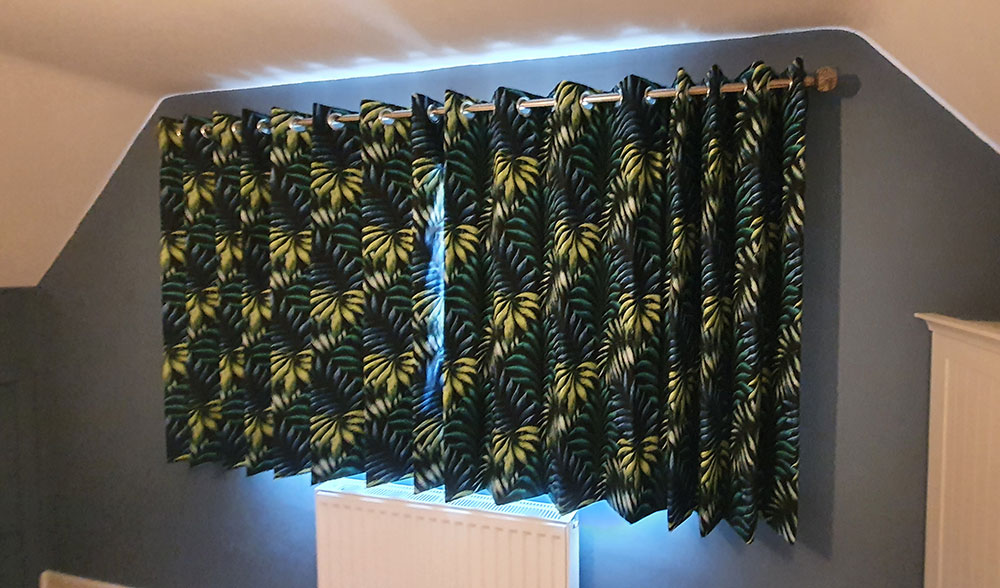
curtains buyers guide1

Key Features and Benefits:

  • Easy Operation: They slide easily along poles, making them ideal for everyday use.
  • Contemporary Look: Creates clean, large, consistent pleats.
  • Simple Assembly: Requires less fabric than pleated styles and is easy to install.
  • Versatile: Fits most rooms but works best with metal poles to prevent wood from denting or catching.

Considerations and Limitations:

  • No Tracks: Only suitable for curtain poles, not tracks.
  • Space Limitations: Not recommended for bay windows as they cannot move past brackets easily.
  • Lighting: Light can filter in over the top of the pole, making them less ideal for maximum blackout needs
  1. Pencil pleat heading

A pencil pleat heading is a classic curtain style characterized by a neat row of tightly gathered folds at the top that resemble a line of pencils. It is created by pulling three or four parallel cords through a heading tape stitched to the back of the curtain. This style is highly versatile, as it can be used with both curtain tracks and decorative poles, and it allows you to adjust the curtain width exactly to your window.
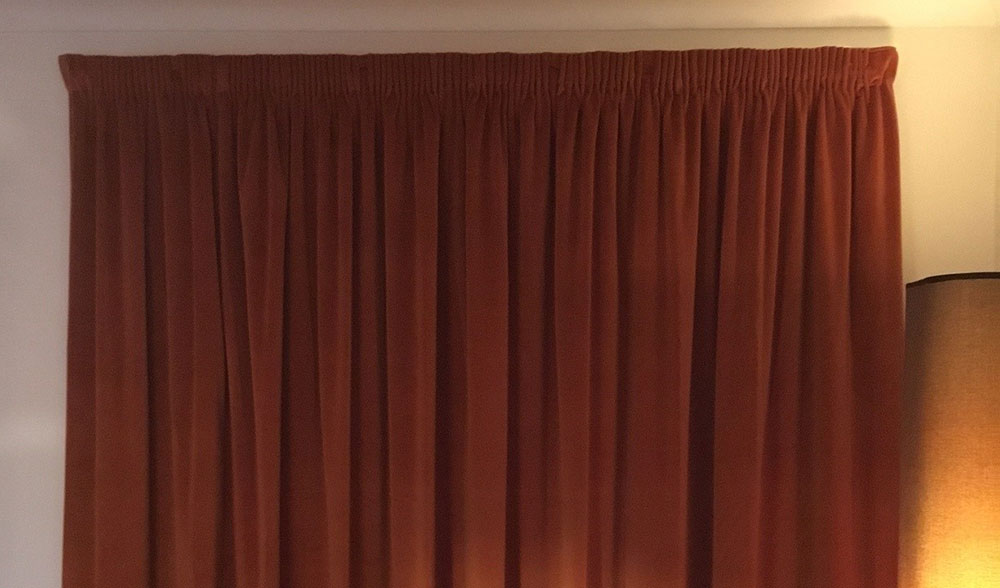
curtains buyers guide2

Key Features and Benefits:

  • Adjustability: Unlike sewn-in pleats, pencil pleats can be gathered more or less tightly to achieve the desired fullness, making them ideal for awkward window sizes.
  • Hardware Compatibility: They are the "go-to" for complex setups like bay windows because they glide seamlessly on tracks that can be bent to follow the room's contour.
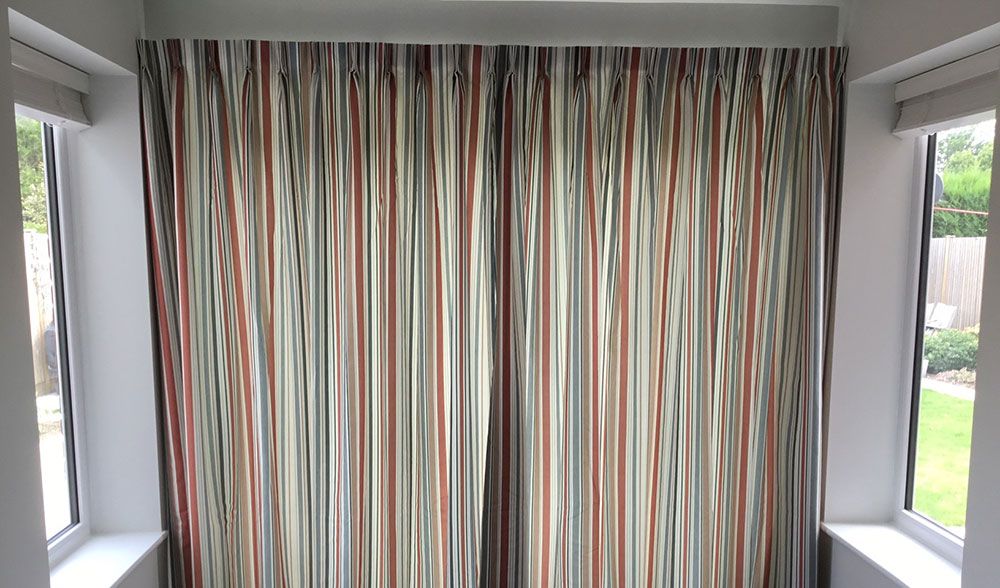
  1. Pinch pleat heading

A pinch pleat heading is a classic, tailored curtain style where fabric is permanently gathered and stitched into uniform groups—or "pinches"—at the top. This creates structured, elegant folds that flow consistently to the floor, offering a much more formal and polished look than adjustable styles like pencil pleat.
curtains buyers guide3

Common Styles:

The style is defined by the number of "fingers" (folds) in each pinch:

  • Single Pinch Pleat: Features one-fold per group. It is a modern, minimalist option that uses less fabric and stacks back very efficiently.
  • Double Pinch Pleat: The most popular "go-to" choice. It uses two folds per pinch, bridging the gap between traditional and contemporary design.
  • Triple Pinch Pleat (French Pleat): The quintessential luxury style with three folds per pinch. It offers maximum fullness and is ideal for formal dining or living rooms.

Key Features and Benefits:

 Fullness: Pinch pleats typically require a fabric ratio of 2:1 to 2.5:1 (e.g., 20–25 inches of fabric for every 10 inches of window) to maintain their rich shape.

  • Hardware: They are hung using adjustable pin hooks inserted into the back of each pleat. This allows them to be used on both decorative poles and functional tracks.
  • Stack Back: These curtains stack back very neatly when open, making them excellent for windows with limited wall space on the sides.
  • Fabric Weight: While versatile, they work best with medium-to-heavyweight fabrics. Very lightweight sheers may lack the structure needed to hold the pleats effectively
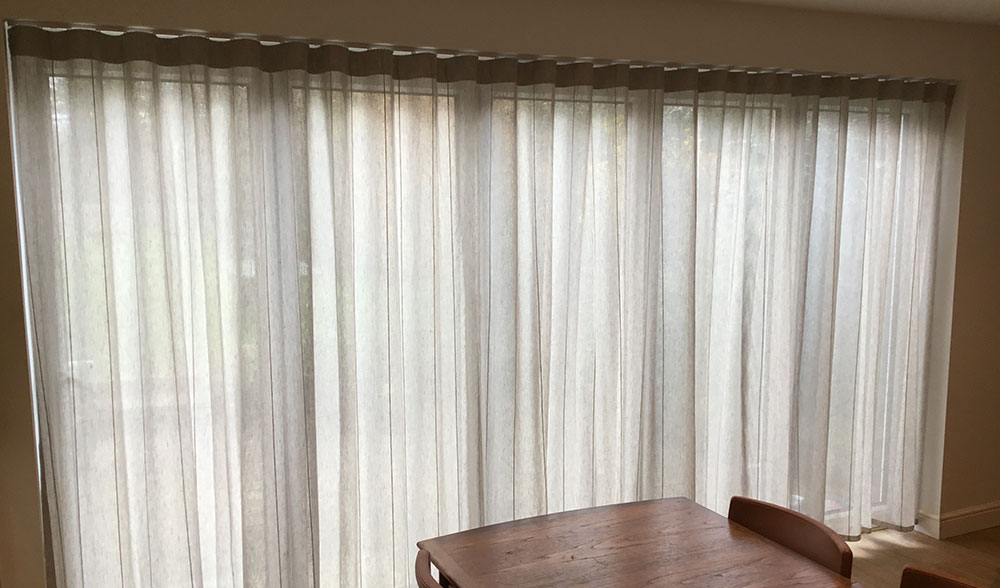
  1. Wave heading

A wave heading is a contemporary curtain style that creates smooth, continuous S-shaped folds from the top to the bottom of the fabric. Unlike traditional pleats that use gathers or bunches, wave curtains hang directly below a specialized track, offering a clean, architectural look.
curtains buyers guide4

Key Features and Benefits:

  • Minimalist Aesthetic: Provides a sleek, modern alternative to traditional pencil or pinch pleats.
  • Compact Stack Back: When open, the curtains fold into a very slim stack, which maximizes natural light and is ideal for large, glazed areas like bi-fold doors.
  • Uniform Appearance: The folds are kept evenly spaced by a specialized glider-cord system within the track, ensuring the waves remain perfect whether the curtains are open or closed.
  • Space Efficient: Because half the fabric sits in front of the track and half behind, it requires less space than many traditional style.

Technical Components:

To achieve this look, you typically need a specific set of hardware:

  1. Wave Heading Tape: A special flat tape sewn to the top of the fabric that dictates the folding structure.
  2. Wave Glider-Cord: Gliders inside the curtain track that are connected by a cord at fixed intervals (usually 60mm or 80mm) to maintain the wave shape.
  3. Compatible Track: While some poles work, a dedicated wave curtain track is often required to support the glider-cord

Choosing Between 60mm and 80mm:

The spacing between gliders determines the depth of the wave

  • 80mm Spacing: Creates deeper, more pronounced waves. It is the most common choice for standard or heavier fabrics.
  • 60mm Spacing: Results in smaller, shallower waves. This is often preferred for smaller recesses or lighter fabrics like voiles.
  1. What lining is best for my curtains?

LINING

We can offer a range of linings to give you the most suitable finish to your fabric and suit your individual requirements.  Lining your curtain will allow your curtains to hang better, protect your fabric from fading as well as furniture and carpets, keep the warmth in and light out where required.

THERMAL CURTAIN LINING FABRIC:

Our Thermal Curtain Lining Fabrics are heavier than standard curtain lining and this means it adds more body and gives a fuller appearance to your curtain. Also, this thermal Lining is a simple way to make your home feel warmer without touching the thermostat.

  1. What different ways can I style my curtains?

Styling curtains involves a mix of choosing the right hardware, header style, length, and layering techniques to match your desired aesthetic, whether modern, traditional, or bohemian.

Here are the different ways to style your curtains:

1. Header Styles (How They Hang)

  • Pinch Pleat: A formal, tailored look where fabric is stitched at the top. Popular options include double or triple pinch pleats, often used in master bedrooms and living rooms.
  • Pencil Pleat: Tight, narrow, and structured pleats that provide a classic look, versatile enough for most rooms.
  • Eyelet/Grommet: A modern, casual option with large rings that allow the curtain to glide easily.
  • Wave/Ripple Fold: A contemporary style where the curtain hangs in a continuous S-shape. This requires a specialized track.
  • Tab Top/Tie Top: Fabric loops or ties at the top for a relaxed, casual, or boho-chic look, often used with lightweight or sheer materials.
  1. Where do curtains look best?

Curtains look best when hung as high as possible—ideally 4–6 inches above the window frame or near the ceiling—and extended 6–12 inches wider than the window on each side to maximize light and create the illusion of larger, taller spaces. They should touch the floor, or hover just above it, to provide a clean, elegant, and modern look.

  1. What accessories can I choose?

Poles and tracks:

Choosing between curtain poles and tracks depends on your curtain type and the look you want. Curtain poles are decorative and best for eyelet or tab-top curtains, while curtain tracks offer a more minimal look and are ideal for heavy curtains or bay windows where smooth gliding is key.

View Curtains

Latest News

DEAR CUSTOMERS,
WE HAVE MOVED FROM 90 YORKTOWN RD, SANDHURST TO 101 HIGH STREET, CROWTHORNE OPPOSITE LIDL. OUR PHONE NUMBERS, EMAIL  REMAIN THE SAME!

Coronavirus (Covid-19)-Terms and Conditions

Successful project with Ministry of defence (MOD).

Over 2872 window blinds expertly installed within 8 weeks by our in-house qualified fitters. The client was extremely happy with the outcome and the job was a huge success. Well done team!

Price Promise

We are self-assured that we offer better prices on all our blinds, shutters, curtains, and awnings, we guarantee if you can find a like-for-like quote cheaper elsewhere, we will beat that quote by 10%.

We regularly check our prices against our competitors–even when they’re running offers – so you can be confident you’re always paying a competitive price.

Request a Call Back

Invalid Input
Invalid Input
Invalid Input
Invalid Input

Service You Can Trust

To ensure our quality standards are met, we get to know every product inside out and back to front. If you’re looking for expert, impartial advice, we really know our stuff. We have over 20 years of experience within the industry and are backed up by a strong Surveyor team, Installation and Manufacturing team with a combined experience Over 50 years, you can be sure to gain the most valuable and honest advice when it comes to considering Window Blinds, Plantation shutters, Curtains, and Awnings. That's why so many customers come to us through recommendation and why so many people come back to us time and time again.

Customer Feed Back

The Charities We Support

British Heart Foundation

We believe in giving back to the community.

Berkshire Healthcare NHS Foundation Trust


Frequently asked questions

How to clean Roller blinds?

  1. Our fabrics include soft and rigid PVC which is very easy to wipe clean simply using a damp cloth. 
  2. Clean regularly with a vacuum to avoid dust build up
  3. Use a damp, clean cloth tackle stains quickly
  4. Work from the top of the blind working down
  5. Use silicon spray to clean the mechanical parts, but avoid getting it on the fabric
  6. Use soapy water to clean plastic chains / cords but not brass or steel
  7. Tackle stubborn stains by using a specialist fabric stain remover or mild detergent and make sure you follow the manufacturer’s instructions closely. Test a modest area of your roller blind fabric first if you’re in any doubt.

How to clean Aluminium Venetian blinds?

  1. Clean metal Venetian blinds with a duster or clean, soft cloth to gently remove debris
  2. Tackle stubborn stains by using a specialist fabric stain remover or mild detergent and make sure you follow the manufacturer’s instructions closely. Test a modest area of your aluminium blind slats first if you’re in any doubt.
  3. Use the upholstery attachment of your vacuum cleaner on a low suction setting to remove dust

How to clean Roman blinds?

  1. Remove dust and debris from your Roman blind using the upholstery attachment of your vacuum
  2. Smooth out creases or wrinkles with a steamer
  3. Tackle stubborn stains by using a specialist fabric stain remover or mild detergent and make sure you follow the manufacturer’s instructions closely. Test a modest area of your roman blind fabric first if you’re in any doubt.

How clean Pleated blinds?

  1. Keep your Pleated blinds dust free
  2. Remove marks with a damp cloth
  3. Tackle stubborn stains by using a specialist fabric stain remover or mild detergent and make sure you follow the manufacturer’s instructions closely. Test a modest area of your pleated blind fabric first if you’re in any doubt.

How to clean Wooden and Faux Wood blinds?

  1. Keep your Wooden blind dust free
  2. Thoroughly clean each individual slat gently
  3. If you have Faux Wood blinds, you can use a diluted mix of detergent and lukewarm water.
  4. If real wood do not use any chemical cleaning products as this may lead to warping or damage to the colour
  5. Use a vacuum cleaner to keep dust at bay

How to clean Vertical blinds?

  1. Clean the headrail of your Vertical blind
  2. Our fabrics include soft and rigid PVC which is very easy to wipe clean simply using a damp cloth.
  3. Vertical blinds made from fabric should be regularly vacuum cleaned to keep them free from dust by using soft upholstery brush attachment of your vacuum cleaner and move gently from top to bottom.
  4. Make sure the louvres continue to glide smoothly by using a silicone spray
  5. Thoroughly clean each individual slat gently
  6. Tackle stubborn stains by using a specialist fabric stain remover or mild detergent and make sure you follow the manufacturer’s instructions closely. Test a modest area of your vertical blind slats first if you’re in any doubt.

How to clean Day and Night blinds?

  1. Gently wipe the surface of the blind with a fur free cloth or feather duster
  2. Remove marks or stains with a damp cloth or sponge
  3. Tackle stubborn stains by using a specialist fabric stain remover or mild detergent and make sure you follow the manufacturer’s instructions closely. Test a modest area of your Day and Night blind fabric first if you’re in any doubt.

How to clean Shutters?

  1. Keep your Shutter dust free
  2. Thoroughly clean each individual slat gently
  3. If you have Faux Wood Shutter, you can use a diluted mix of detergent and lukewarm water.
  4. If real wood Shutter do not use any chemical cleaning products as this may lead to warping or damage to the colour
  5. Use a vacuum cleaner to keep dust at bay

How to clean Curtains?

  1. All our curtains are dry clean only, but there are other ways to keep your curtains looking good:
  2. Clean your curtains regularly with a vacuum to avoid dust build up
  3. Use a hand-held steam to neaten creases and wrinkles
  4. Keep your room well-ventilated to avoid mould build up

What are Awnings?

  1. Patio Awnings are made from a durable fabric that are designed to shade you and your patio furniture on even the brightest days available in motorised or manual.
  2. Motorised version - Useful for any occasion over the summer months, our patio Awnings can be extended and retracted with just a twist of a simple remote control with motorised version
  3. Manual version -easy to use crank mechanism allowing you to customise shading to your outdoor space throughout the day.

How to clean Awnings?

  1. Make sure your awning is fully retracted into their protective cassettes after every use.
  2. To clean an Awning, first ensure that the fabric is fully extended. Use a mix of warm water and detergent-free soap as well as a microfibre cloth to gently wipe the Awning clean; Then allow time for the fabric to dry completely. We recommend cleaning your Awning at least twice a year; Once before using it in the summer and again before you’ve rolled it up for winter, we also recommend wiping the metal components and fittings twice a year with a soft cloth dampened with warm soapy water.
  3. Tackle stubborn stains by using a specialist fabric stain remover or mild detergent and make sure you follow the manufacturer’s instructions closely. Test a modest area of your awning fabric first if you’re in any doubt.
  4. Please don't use a pressure washer or bleach It will quickly damage the structure of the fabric.

Can Awning Be Used in Winter?

  1. Our awnings are water resistant and can handle light rain just fine; But they are not designed to withstand some of the more extreme conditions in winter such as heavy rain, wind and snow.
  2. We recommend minimal use of the Awning throughout winter
  3. we also recommend removing the decorative fabric valance and storing it somewhere dry until the warmer weather returns.

Are Awnings Wind and rainproof?

  1. Although water resistant and durable, our retractable Awnings are not designed for heavy rain as this can pool on the fabric and substantially increase the Awning’s weight.
  2. We strongly recommend leaving the Awning fully retracted on windy days or during heavy rainfall.

How do I buy my blinds, shutters, curtains or awnings from Blinds and Awnings?

  1. You will need to arrange an in-home appointment with Blinds and Awnings to buy your blinds, shutters, curtains or awnings. We provide an in-home service; our products are not available to buy online.
  2. During the in-home appointment your Blinds and Awnings advisor will show you the range of products, your windows will be measured, and you will be given a price for the products you want to buy. You can choose to buy your blinds, shutters, curtains or awnings during the appointment or you will be given a quote so you can take some time to think about it. There is never any pressure to buy during an in-home appointment with Blinds and Awnings, and your quote is valid for 4 weeks.

When do I pay for my blinds, shutters, curtains or awnings and what payment methods can I use?

  1. You pay for your blinds when you place your order. Blinds and Awnings advisors have chip and PIN machines. We accept Visa and Mastercard credit and debit cards except American Express credit cards. You can also pay in-home direct from your bank account. If you are placing an order at a date later than your appointment, you can pay over the phone, in our showroom or by Bank Transfer.
  2. A 50% Deposit is taken at point of order. The remaining Balance is due upon collection of Supply Only products or when booking the Installation Date.
  3. We also offer a 2% settlement discount if full payment is received in advance.

Do you charge for Fittings?

  1. Our Fittings are Free or Charge.

Our Sustainability Pledge

Opening Hours

Mon - Fri 9.30 to 17.00

Sat 9.30 to 15.00

Closed Sundays and Bank Holidays

Visit Our Showroom

101 High Street
Crowthorne
Berkshire
RG45 7AD

View Map